By Lisseth Reano M.Sc. OT, OT Reg. (Ont.)
Occupational therapy (OT) is often associated with helping children improve fine motor skills and handwriting. And that’s certainly part of what we do. OTs support children in developing an efficient pencil grasp, clearer written work, and stronger written work organization.
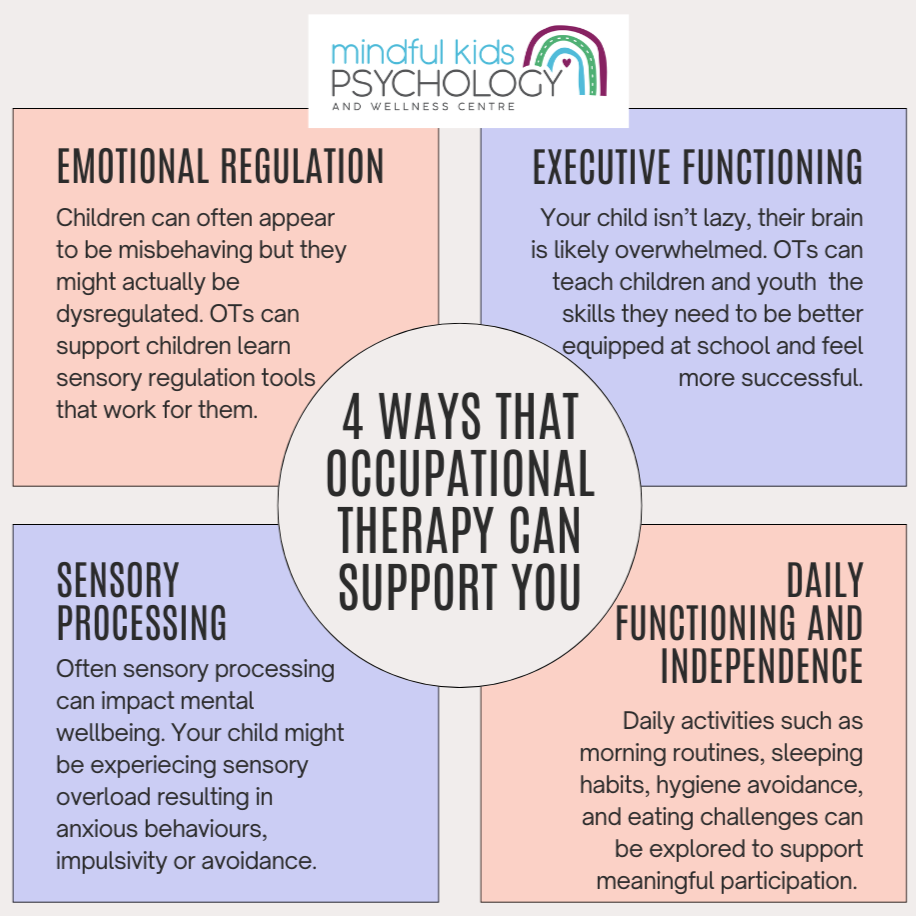
But OT reaches far beyond printing skills. It is a field focused on helping children and youth build the skills they need to participate in everyday tasks— at home, at school, and in their community. Let’s take a closer look at the many ways occupational therapy can support your child’s growth, confidence, and independence.
1. Emotional Regulation
Big feelings can be overwhelming for children. What may look like tantrums, shutdowns, or outbursts is often a child who is dysregulated and doesn’t yet have the tools to cope.
Occupational therapists help children:
Understand their body’s signals
Recognize early signs of overwhelm
Develop calming and alerting strategies that work for their unique nervous system
2. Executive Functioning
If your child struggles to get started on homework, forgets instructions, or seems unmotivated, it may not be laziness — it may be executive functioning challenges. Executive functioning skills help us:
Plan and organize
Manage time
Start and complete tasks
3. Sensory Processing
Some children are more sensitive to noise, clothing textures, movement, or busy environments. Others may seek extra movement or touch. Sensory differences can impact mood, attention, sleep, and daily functioning.
Occupational therapists:
Identify your child’s unique sensory profile
Help reduce sensory overload
Create personalized sensory strategies
4. Daily Functioning & Independence
Everyday tasks like getting dressed, brushing teeth, following a morning routine, or trying new foods can sometimes feel overwhelming for children.
OT focuses on building independence in daily life by:
Breaking tasks into manageable steps
Teaching adaptive strategies
Creating predictable, supportive routines
If you’re wondering whether occupational therapy could support your child, we’re here to guide you. Give us a call and we are happy to further discuss.