Why Games Help Build Executive Function
By Angela Ventrice B.A. (Hons), B.Ed. and Dr. Marina Heifetz, C.Psych
Games aren’t just fun—they help children and teens practice the skills they need for school, routines, and everyday life.
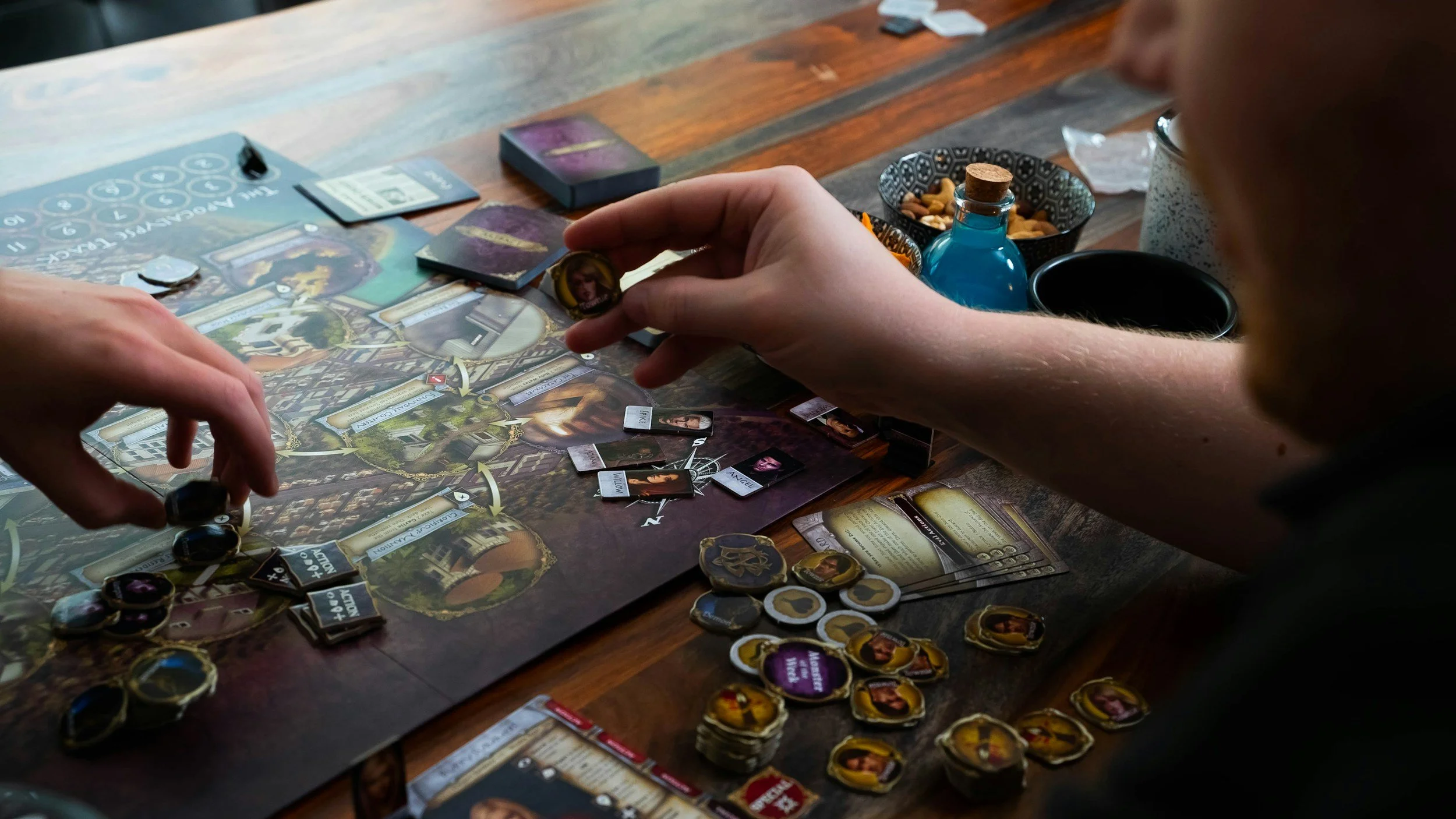
When kids and teens play board games, card games, puzzles, strategy games, or role-playing games, they’re building executive function: the brain skills that support planning, attention, self-control, working memory, and adapting to change. For students with IEPs or learning differences, these skills often develop differently and benefit from gentle, intentional practice.
Research:
We always aim to stay in line with the up-to-date research evidence and, indeed, there is research to support that games actually help with strengthening executive function skills!
For instance, a recent systematic review completed by Charifa and Apriliani in the Bulletin of Counseling and Psychotherapy found that children and youth (3-18 years-old) playing board games and card games showed improvements across core executive function domains - such as inhibition, cognitive flexibility, and working memory. The games reviewed provided structure and engagement for cognitive training through the “reveal-and-react” mechanism, a strategy that builds on speed and strategic planning. These games included “Ghost Blitz,” “Dobble,” “Bee Alert,” and “Speed Cups.” While more research is needed on long-term impacts of these games, these findings can help create cost-effective and fun ways to support executive function skills, not to mention a way to build connection when playing together.
What Games Teach
•Follow rules and routines
•Wait their turn and manage impulses
•Remember instructions and multi-step strategies
•Adjust plans when things don’t go as expected
•Handle winning, losing, and frustration
Games to Try at Home
•Board & Card Games: Uno, Connect 4, Monopoly → planning, impulse control, working memory
•Strategy & Logic Games: Chess, Blokus, Codenames → flexible thinking, attention, problem-solving
•Puzzles: Jigsaw puzzles, Sudoku → focus, persistence, working memory
•Role-Playing & Pretend Play: Dungeons & Dragons, imaginative play → planning, self-regulation, perspective-taking
•Digital Games: Minecraft, Portal → planning, problem-solving
Games are structured, low-pressure, and motivating—so children and teens can practice these skills more successfully than during homework or chores.
A Note for Parents/Caregivers: While games are a powerful tool, some children and teens benefit from explicit executive function support to help these skills transfer to school, exams, and daily life.
📚 References
Charifa, P., & Apriliani, I. (2025). Playing to Focus: A Systematic Review of Reveal-and-React Board and Card Games for Executive Function Development in Children. Bulletin of Counseling and Psychotherapy, 7(2). https://doi.org/10.51214/002025071524000