Neurodiversity and Neuro-affirming practice
By Dr. Marina Heifetz, C.Psych
Neurodiversity is a term that has been developed from the social justice movement to reduce judgement, prejudice, discrimination, and inequality, while fostering inclusion, acceptance, and support. The idea is that neurodiverse individuals’ brains are wired differently and these differences are not deficits. In sum, human nervous systems vary, which leads people to think, feel, behave, and learn in different ways.
What is included in the neurodivergent umbrella? Many different diagnoses and conditions as may be seen below:
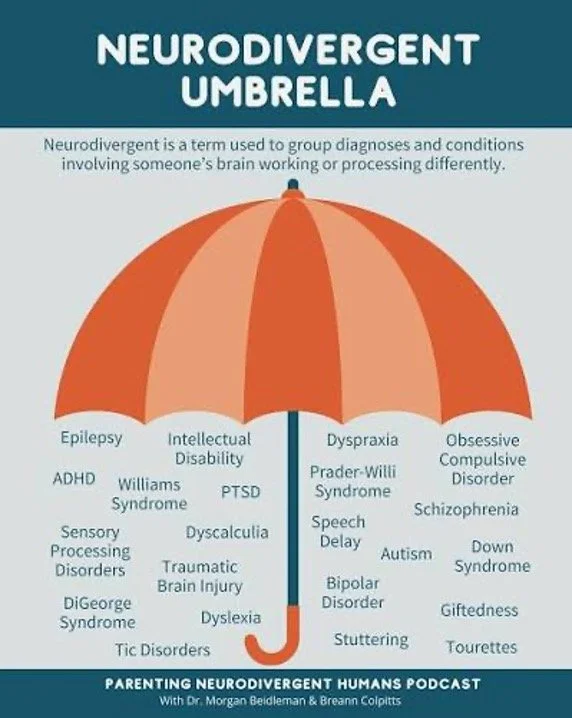
Often times, there are high rates of co-occurrence of these conditions. For example, 40-80% of autistic individuals also have ADHD, and may also experience co-occurring mental health concerns. It is important to get to know each person individually and learn about their way of thinking and their strengths and needs. For example, there is a saying in the autistic community: “If you’ve met one person with autism, you’ve met one person with autism” (Dr. Stephen Shore). There are a lot of individual differences, including language preferences. For example, approximately 60-80% prefer ‘autism’ and ‘autistic person’ rather than person with autism. It is important to always ask, not assume!
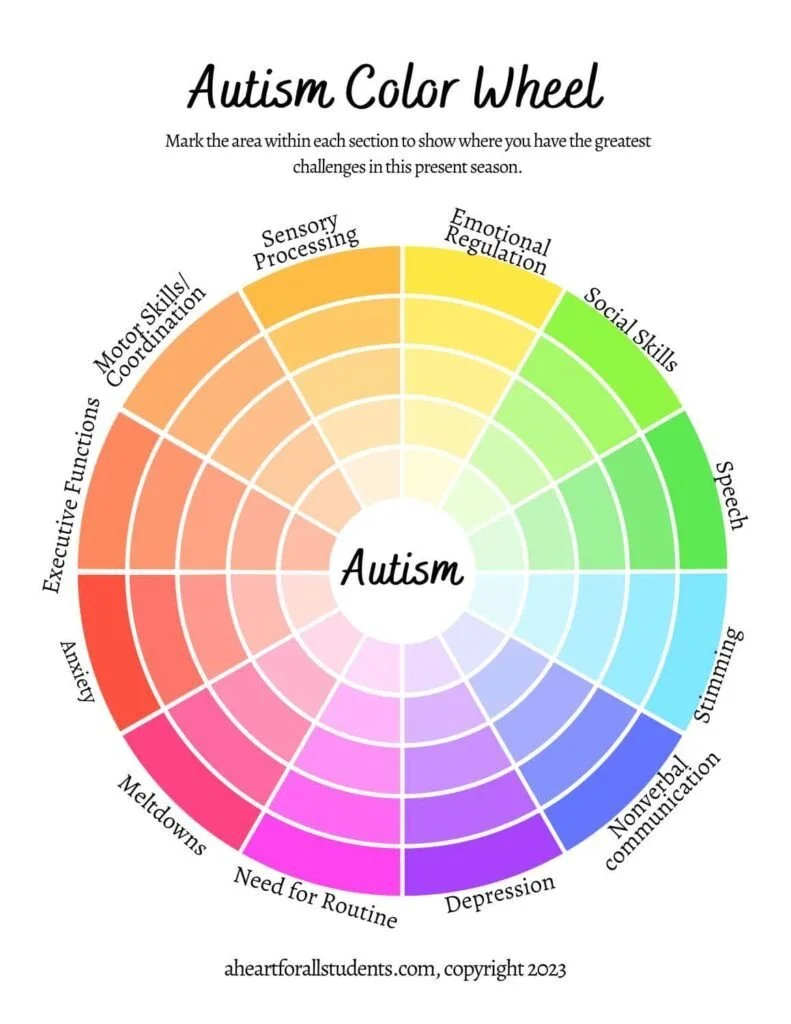
With respect to autism, for example, there may be great variability in how these individuals communicate and with respect to their focused interests, behaviours, and sensory needs. The colour wheel here sums it up well! You can use this with your autistic child or youth to explore the various areas that may feel different for them and where their strengths and needs lie.
Neurodiversity also helps us understand why the traditional approaches to working with and supporting autistic individuals have not been consistently helpful or effective. For instance, forcing an autistic child to make eye contact when it’s not something they are comfortable with can actually lead to increased distress and mental health challenges. An alternative approach is that we may still want to talk about and teach eye contact as an important skill for certain times and places (e.g., interviews), while also fostering the importance of ensuring that the autistic individual makes eye contact on their terms and within their own window of tolerance (i.e., what feels comfortable for them).
As the autism colour wheel reflects here, there are also often overlap with emotion regulation challenges and anxiety. Living in a neurotypical world can be challenging and stressors that others may not find bothersome (e.g., loud classroom, or simple tasks like getting dressed and ready for school) may take significant energy for a neurodivergent individual. Building mindful awareness of these differences and stressors is an important step toward finding a more balanced and regulated day-to-day functioning. By managing energy more intentionally -such as creating regular breaks and having access to appropriate sensory supports - we can ensure that the burnout is not a regular experience. Some ideas for adding to this energy plan:
schedule regular downtime
setting boundaries/ saying ‘no’
reducing sensory input
focus on special interests that bring in joy and replenish
building support network
Ultimately, avoiding burnout is more than just avoiding meltdowns and dysregulation or shut down; it is about learning more about one’s strengths and needs and ensuring that these are important components of daily life.